Monday, January 6, 2014

Strawberry Fields


Following is an augmented excerpt of the chapter "Memorials and Monuments" from our latest book,
Central Park NYC, published this past September by Rizzoli.


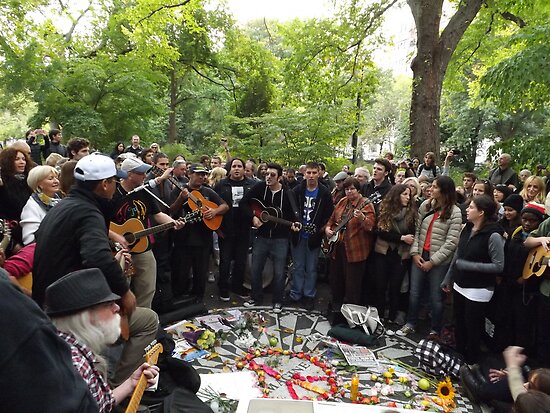
Yoko Ono, John Lennon’s widow, conceived Strawberry Fields as a living memorial to her slain husband and dedicated the site on what would have been the singer’s forty-fifth birthday, October 9, 1985. The two-and-a-half-acre informal garden occupies a sloping triangle of land at Central Park West and 72nd Street near the Dakota Apartments, the family’s residence and the site where Lennon was murdered on the evening of December 8, 1980. Ono worked with landscape architect Bruce Kelly and the Central Park Conservancy to transform the parcel into a Garden of Peace with plants donated by over 120 nations.


The garden, of course, is named after one of Lennon's most famous Beatles songs, Strawberry Fields Forever, a haunting psychedelic reminiscence of his childhood secret garden, the grounds of the Strawberry Field orphanage in Woolton, Liverpool. The iconic Imagine mosaic, a simple round set in the pavement at the heart of the garden, has become a shrine to Lennon’s memory, collecting notes, flowers and votive candles from his myriad fans, and it is the site of annual vigils to celebrate his birth and mourn his death.


Though often described as interpreting traditional Roman patterns, the design is actually far more expressive than this reading allows and alludes to Lennon's uniquely provocative pacifism and strongly Buddhist leanings and worldview. (Above, Lennon and Ono staging their famous bed-in for peace in Amsterdam in 1969.) IMAGINE, the title of Lennon’s famous 1971 peace anthem, holds the center of an abstracted lotus flower made of thirty-two radiating segments, the number of Buddha’s virtues. (Below, Buddha on the lotus throne.)


In Buddhist traditions, the fully opened lotus, rising above muddied waters, symbolizes enlightenment, and a white lotus connotes purity of mind and spirit. The duality of black and white represents matter and spirit, the mud from which the lotus blooms and the blossom of understanding. And finally, the flower signifies rebirth in a figural and literal sense, entirely appropriate to honor a musician who integrated Buddhist mantras into his music and Buddhist philosophy and a Buddhist worldview into his life.


Disarmingly simple, a single word centering an abstracted flower, Lennon’s memorial owes an enormous conceptual debt to Maya Lin’s revolutionary 1982 Vietnam Veterans Memorial in Washington, D.C., which overturned traditional notions of a monument’s form and conceptual underpinnings.


However, the Imagine mosaic takes Lin’s abstraction a step further by renouncing three-dimensionality entirely and setting its single-word message into the earth, where it can be trod upon or reverenced—a wry and profoundly insightful evocation of Lennon’s humanity and spirit.
And finally, and as Buddha himself would have observed, there is nothing new under the sun and we find a remarkable conceptual precursor in the 18th-century French garden of Ermenonville, the Altar of Reverie—a simple cylindrical socle, artfully aged, inscribed with the invocation, "To Dream."

Tuesday, December 17, 2013

Franco Maria Ricci's extraordinary labyrinth


On the fertile agricultural plain surrounding Parma, Italy, you can drive for days while visiting the region's spectacular Renaissance towns, churches and villas (below, the view from the terrace of the Castello di Fontanellato) without ever laying eyes on a single cow that gives the milk that is aged to its glorious Parmesan cheese, nor will you ever see one of the pigs that eventually yield its succulent Parma ham. One dines spectacularly well there, even by Italian standards, but exactly how this is achieved is one of Parma's small mysteries—though an occasional noxious breeze, pungent enough to strip paint, will assure you that these beasts do indeed lurk somewhere hidden in those broad green fields, just beyond sight. 


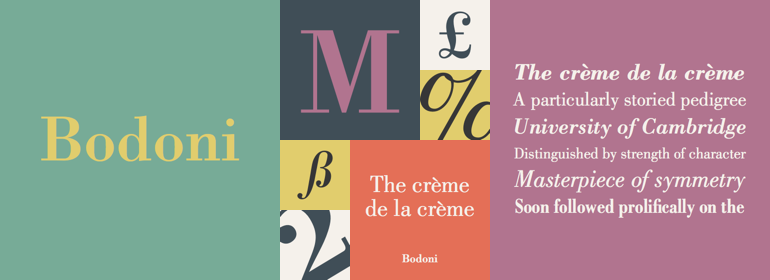
Franco Maria Ricci, the legendary publisher, lives on his ancestral lands in Fontanellato, which he has transformed according to his own unique aesthetic vision. He is the man who near single-handedly revived the work of the great neoclassical typographer, Giambattista Bodoni, who had made Parma his home in the late eighteenth century. Ricci comes from ancient Parmesan nobility and has dedicated his life to the cultivation and dissemination of all that is extraordinary, remarkable and beautiful, by way of the pages of his namesake magazine, FMR ("the most beautiful magazine in the world") and a host of magnificent publications. Fortuitously, pronouncing his initials in French yields the word ephémère, ephemeral, and it is this aura of felicity and harmony that this most cultivated of men has cultivated throughout his life, seemingly effortlessly.


This past summer, I spent several days with friends visiting Ricci and his charming companion, Laura Casalis, who graciously welcomed us with their generous hospitality. A warm, sunny day was reserved for visiting Ricci's estate, and after traversing miles of sun-struck, open fields with barely a poplar in sight, we passed a simple modern gate and drove down a long, shaded and sun-dappled allée of bamboo to find ourselves in another world—a verdant compound set in a bamboo glade that could just as well be found in Mexico. An old farm building has been converted into a contemporary entertaining space of impressive scale—an aerie looking into the bamboo canopy, with an inky-dark lake to one side. 


The contrast between the sun-struck fields without and the bamboo forest (or perhaps jungle) within was vivid and delightful; Ricci has crafted his own private world—even his own private micro-climate. Further on, Ricci has renovated the ground floor of the crumbling ancestral villa into an elegant suite of rooms with a barrel-vaulted, neoclassical library which houses the largest collection of Bodoni's printed works in the world. Like the vast, Barragan-esque patio compound, the neoclassical grotto beneath the overgrown ruins is a complete, shocking, satisfying surprise.


Further on, some ten minute's walk, lies the most remarkable of all Ricci's marvels, his bamboo labyrinth, covering 17.5 acres, by a factor of five the largest maze in the world. The labyrinth, of course, is an ancient cipher representing man's path through life; its circuitous course, from periphery to center, symbolizes life's journey from ignorance to self-knowledge and enlightenment.


The plan of Ricci's labyrinth, two overlapping squares, evokes Renaissance fortifications, and over a dozen species of bamboo have been planted to form its high, dense allées. Inside its precincts he has constructed a museum and study center which will house his library and collections, as well as a visitor's center.


The compound, built of warm rose Roman brick, is designed in a neoclassical vocabulary and laid out in a series of symmetrical, generously scaled courtyards, perhaps better called atria.


A triumphal arch greets visitors entering the compound, and the main axis culminates with yet another surprise, a pyramidal folly.


The scale of the undertaking is commensurate with the audacity of Ricci's vision. He chuckled when he said, leading us unerringly through the maze, that no one would be allowed to enter the labyrinth without a portable phone, but indeed the rule will be necessary once the kilometres of paths are opened to the public.


On a final note, Rizzoli has recently published Ricci's book, Labyrinths; needless to say, it too is exceptional.

Friday, December 6, 2013

Aux barricades, comrades!
France toys with its next revolution


Mon dieu! Where to begin? the French government, in a bout of historical amnesia, has decided to erect a nationwide network of electronic "éco-tax" barriers straddling its major highways (which have been privatized into corporate-owned toll-roads, but that is another matter) to collect an environmental tax upon the country's long-distance truckers.


Well, apparently this was the tax too far, the impot that broke the camel's back, and Brittany—that poor, agrarian and fiercely self-aware region that French nationalism never fully managed to tame—has gone into open revolt. Red Phrygian caps, or "red bonnets," symbol of the French revolution of 1789, have become all the rage, sported by enraged citoyens who gather to wave the Breton flag and to set fire to these newly erected electronic tax barriers, while the nation's truckers have organized to block the country's major vehicular arteries for the last several weekends.


Open revolt. That, in a nutshell, is what is currently brewing en ce pays-ci, which coincides with record levels of popular discontent with the government and a record-low approval rate for the Président de la République, François Hollande. Hollande has plumbed the lowest depths of approval (and conversely the apex of popular disapproval), reaching 16% overall approval in the latest national polling—just nine percentage points ahead of the US Congress.

In an unprecedented display of public discontent, Hollande was publicly booed and heckled while observing solemn Armistice celebrations at the base of the Arc de triomphe this past November 11. For the moment, civil disobediance and organized arson are reserved for weekends and national holidays, in the French tradition of protest as wholesome family entertainment. However, all this could change with further incitement, leading to an escalation to public strikes—another French tradition that even the leader of the nation's most leftist union has publicly disavowed, fearing to become the spark that sets off a mood that is "explosive all over."


Meanwhile, the country's préfets, akin to county executives, sent a confidential, leaked memo to the Elysée that stated in the starkest of terms that conditions in France are a "tinderbox," that the populace has never been more resentful of the unrelenting onslaught of increasing taxes and stagnating incomes, and that the government had better take heed of, and gingerly diffuse, this volatile situation or face a "fronde sociale," or popular revolt.

So, what did the government do? Why, it also decided to increase the national sales tax, or TVA, come the new year. Bonne année!  Only problem, fully 81% of French citizens find the current tax system unjust and want the country's finances completely revamped.

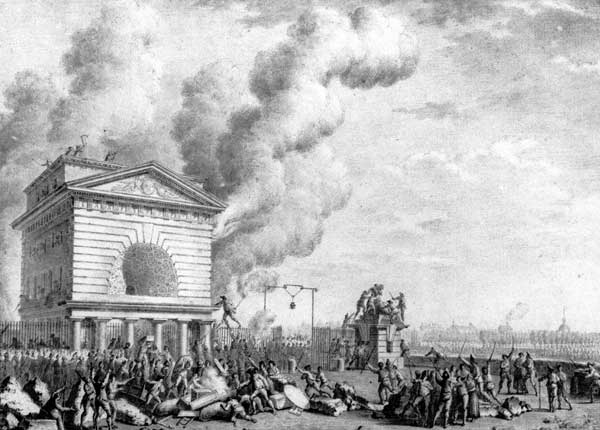
A few tidbits of history, to put all this in perspective. The last time France had a revolution, in 1789, it was incited by increasingly onerous taxation by a deeply indebted government, culminating with the construction of a physical Berlin wall of tax barriers about Paris, imprisoning the city's populace (we even blogged about it, here).


Also note the uncanny resemblance of President Hollande to Louis XVI, and the uncanny resemblance of his policies to those of the late, beheaded monarch: blind allegiance to the status quo in the face of increasing popular discontent during a prolonged period of deepening economic adversity. One should also remark that Hollande shows none of the creativity or intestinal fortitude necessary to reddress the mounting crisis of confidence in the competence and direction of the French government itself, to say nothing of a fundamantal realignment, overwhelmingly demanded by the citizenry, of its implacably oppressive tax structure. 


Today, the New York Times reports that the populist, far-right Front National is the most popular political party in France, with the Socialist Party of Hollande trailing badly. You do not need to be an oracle or a political pundit to divine that the present moment is about the absolute worst time for the government to re-erect a modern version of the tax barriers that incited the French Revolution. 

Willful amnesia, and déjà vu all over again.

Monday, December 2, 2013

Celebrating Central Park NYC at Librarie Galignani, Paris


We're delighted to announce that Paris' premier bookstore, the august Librarie Galignani on the rue de Rivoli, will be hosting an evening celebrating publication of Central Park NYC on the fourth December--hélas by invitation only, but we hope if you have recieved your invitation that you'll join us then.


We will give a short talk about the book and Central Park, and then be available to sign copies. These are festive evenings that mingle current events and the love of books, and Galignani has created a wonderful authors' program that has made it a center of Parisian culture. Needless to say, we are honored and are looking forward immensely to the soirée.

Wednesday, November 27, 2013

A Year of Pagodas agenda


As a part of our first season of paper products for Libretto Group, we have also designed an agenda, A Year of Pagodas, that features a dozen spreads of our Chinoiserie fantasy watercolors, one for each month of the year (below is a sample spread for October).

Pagodas is a B5 format, hardbound notebook (7" x 10") with 144 ruled pages, twelve double-page spreads and a ribbon marker.


The cover features a crisp blue-and-white toile de Jouy pattern, reversed for the endpapers (bottom), which also include a whimsical bookplate. The page ends are gilded and each month's ten lined pages are crowned with that month's pagoda silhouetted in miniature.

As with the other items in the collection, please follow this link to find a retailer near you or contact Libretto Group directly.


Sunday, November 17, 2013

Table lanterns are back


In our last post, we mentioned that we have a new design partnership with Libretto Group of New York, manufacturers and distributors of innovative paper products. Libretto's other design partners include Christian Lacroix, the New York Times and London's Victoria & Albert Museum.

In addition to the Chinoiserie note cards featured in our last post, Libretto is also distributing our ever-popular table lantern designs: the Belvedere (above, a neoclassical pavilion), the Tea House (below, a Chinoiserie pagoda) and Mr. Jefferson's Folly (bottom, a Georgian/neoPalladian pavilion). These paper lanterns have been extremely popular and unfortunately they have also been out of stock for some time, but we are delighted to announce that they are once again availableand worldwide at that.


Also, Libretto will be launching a new series of lanterns early in the new year, with an even greater variety of designs to choose from, and we will be posting about them in due course.

If you wish to purchase, please look here for a store near you or contact Libretto Group directly for your nearest retailor. Also, Libretto will shortly be expanding their website to include an advanced store finder to make finding a retailer an easy task.


Monday, November 4, 2013

Chinoiserie note cards in Architectural Digest


Architectural Digest has featured our new package of Chinoiserie note cards in their latest issue (screen capture below), available at The Frick Collection museum shop in Manhattan and at select retailers worldwide.


There are two folding cards each of four motifs, reproducing our watercolors of fantasy pagodas framed by a deep red Chinoiserie fillet/border. The reverse of the cards feature the pagodas in silhouette against richly colored grounds (below). The images are printed on a heavywieght laid paper and are packaged with envelopes in a handsome paper wallet.


The card set is part of our first season of designs for Libretto Group, manufacturers of innovative stationery and paper products. Libretto is a dynamic company based in Manhattan with a worldwide distribution; their other design lines include Christian Lacroix, The New York Times and the Victoria & Albert Museum.

Thursday, October 31, 2013

Central Park NYC Exhibition at Didier Aaron, Manhattan


The New York Times T Magazine, 24 October 2013

This past month has been a very busy time as we launched our latest book, Central Park NYC, and prepared an exhibition of the watercolors illustrating that book at Didier Aaron, Inc. in Manhattan.

The eponymous exhibition opened on the 22nd with a private preview for the Woman's Committee of The Central Park Conservancy, and it was an ebuillant evening and a true pleasure to meet so many dedicated benefactors of the park. New York itself was as vibrant as we've ever experienced it, and it was an enormous pleasure to spend even such a short time in our former home.

The following evening was the exhibition's general opening, and shortly after the New York Times T Magazine published this online review, with a gallery of six watercolors from ths show.

The exhibition at Didier Aaron, Inc. runs until November the 8th. The gallery is open from 10 AM to 5:30 PM, Monday to Friday, tel. 212-988-5248.

Sunday, September 15, 2013

Central Park NYC: "redefines the coffee table book"

We are extremely pleased to announce that Rizzoli published Central Park NYC: An Architectural View this past Tuesday, September 10, accompanied by a review in that same day's edition of the New York Times.

From the Times review:
...in “Central Park NYC: An Architectural View” (Rizzoli, $75), the artist-authors Andrew Zega and Bernd H. Dams explore the park’s multitude of overlooked smaller structures, statues, benches and bridges.

Their original watercolors and photographs and revealing text redefine the coffee table book: More than just pretty pictures to be savored, these images will enrich and deepen the reader’s experience of the park.
We are delighted that the Times recognized and lauded the underlying rigor of this book. We should also point out that beyond the park's structures and ornaments, our true focus is rather upon the park's design, divided into thirteen chapters that examine important features, such as the Mall, Bethesda Terrace and the Belvedere, and others devoted to design elements, such as the park's monuments, its bridges and arches, its water features, and its rustic structures.


To peek inside, you can visit this link to the book's Amazon page, where you can access an interactive pdf with a shocking number of the book's pages put online for your perusal. While pasting the link, we were delighted to see that Central Park NYC has already reached the #1 position in Amazon's landscape architecture category, and horrified that only 2 copies remain in stock. Our thanks to everyone who made this possible!

Thursday, September 12, 2013

Maintenant ouvert! Now open!


Well, we're deep into the second week of la Rentrée and this means that all of Paris's surfeit of boulangeries, agences immobiliers and pressingsthe stalwart pillars of the French economy, such as it isare now officially reopened for business. And so, dear readers, are we.

We have been busy during our hiatus, mind you, and spent no appreciable time in traffic jams on the autoroutes or lying on cobble-strewn beaches, hélas, but this does however mean that we have much to report and to catch up on. 

We will be posting a number of announcements about developments in our work these next days, so please check back with us often during September.

And the first order of business is to report to those patiently awaiting the reopening of the Architectural Notecards online store is, firstly, thank you for your patience!, and secondly, it is again online (click on the treillage pavilion at right) with a spanking new format, and hopefully without any fatal bugs. As those of you who deal with this sort of thing know, patience when upgrading a website is not only a virtue but a sorely taxed necessity.

First thing you will notice is that each card is presented at full scale, so you will be able to see the majority of our watercolors online in great detail, making the boutique a virtual gallery as well. 

As an added bonus, the entire Architectural Watercolors website has been upgraded as well, with a responsive format that will make it fully accessible to those of you with tablets and smartphones. It is still a bit rough about the edges, so please bear with us as we polish and expand existing content in the coming weeks. The shop is fully integrated with the main site and is also responsive for those of you wedded to those clever little microwave emitters, which adds up to over half the page views in the US, so none too soon! 

Alors, bienvenue!