Sunday, November 17, 2013

Table lanterns are back


In our last post, we mentioned that we have a new design partnership with Libretto Group of New York, manufacturers and distributors of innovative paper products. Libretto's other design partners include Christian Lacroix, the New York Times and London's Victoria & Albert Museum.

In addition to the Chinoiserie note cards featured in our last post, Libretto is also distributing our ever-popular table lantern designs: the Belvedere (above, a neoclassical pavilion), the Tea House (below, a Chinoiserie pagoda) and Mr. Jefferson's Folly (bottom, a Georgian/neoPalladian pavilion). These paper lanterns have been extremely popular and unfortunately they have also been out of stock for some time, but we are delighted to announce that they are once again available—and worldwide at that.


Also, Libretto will be launching a new series of lanterns early in the new year, with an even greater variety of designs to choose from, and we will be posting about them in due course.

If you wish to purchase, please look here for a store near you or contact Libretto Group directly for your nearest retailor. Also, Libretto will shortly be expanding their website to include an advanced store finder to make finding a retailer an easy task.


Monday, November 4, 2013

Chinoiserie note cards in Architectural Digest


Architectural Digest has featured our new package of Chinoiserie note cards in their latest issue (screen capture below), available at The Frick Collection museum shop in Manhattan and at select retailers worldwide.


There are two folding cards each of four motifs, reproducing our watercolors of fantasy pagodas framed by a deep red Chinoiserie fillet/border. The reverse of the cards feature the pagodas in silhouette against richly colored grounds (below). The images are printed on a heavywieght laid paper and are packaged with envelopes in a handsome paper wallet.


The card set is part of our first season of designs for Libretto Group, manufacturers of innovative stationery and paper products. Libretto is a dynamic company based in Manhattan with a worldwide distribution; their other design lines include Christian Lacroix, The New York Times and the Victoria & Albert Museum.

Thursday, October 31, 2013

Central Park NYC Exhibition at Didier Aaron, Manhattan


The New York Times T Magazine, 24 October 2013

This past month has been a very busy time as we launched our latest book, Central Park NYC, and prepared an exhibition of the watercolors illustrating that book at Didier Aaron, Inc. in Manhattan.

The eponymous exhibition opened on the 22nd with a private preview for the Woman's Committee of The Central Park Conservancy, and it was an ebuillant evening and a true pleasure to meet so many dedicated benefactors of the park. New York itself was as vibrant as we've ever experienced it, and it was an enormous pleasure to spend even such a short time in our former home.

The following evening was the exhibition's general opening, and shortly after the New York Times T Magazine published this online review, with a gallery of six watercolors from ths show.

The exhibition at Didier Aaron, Inc. runs until November the 8th. The gallery is open from 10 AM to 5:30 PM, Monday to Friday, tel. 212-988-5248.

Sunday, September 15, 2013

Central Park NYC: "redefines the coffee table book"

We are extremely pleased to announce that Rizzoli published Central Park NYC: An Architectural View this past Tuesday, September 10, accompanied by a review in that same day's edition of the New York Times.

From the Times review:
...in “Central Park NYC: An Architectural View” (Rizzoli, $75), the artist-authors Andrew Zega and Bernd H. Dams explore the park’s multitude of overlooked smaller structures, statues, benches and bridges.

Their original watercolors and photographs and revealing text redefine the coffee table book: More than just pretty pictures to be savored, these images will enrich and deepen the reader’s experience of the park.
We are delighted that the Times recognized and lauded the underlying rigor of this book. We should also point out that beyond the park's structures and ornaments, our true focus is rather upon the park's design, divided into thirteen chapters that examine important features, such as the Mall, Bethesda Terrace and the Belvedere, and others devoted to design elements, such as the park's monuments, its bridges and arches, its water features, and its rustic structures.


To peek inside, you can visit this link to the book's Amazon page, where you can access an interactive pdf with a shocking number of the book's pages put online for your perusal. While pasting the link, we were delighted to see that Central Park NYC has already reached the #1 position in Amazon's landscape architecture category, and horrified that only 2 copies remain in stock. Our thanks to everyone who made this possible!

Thursday, September 12, 2013

Maintenant ouvert! Now open!


Well, we're deep into the second week of la Rentrée and this means that all of Paris's surfeit of boulangeries, agences immobiliers and pressings—the stalwart pillars of the French economy, such as it is—are now officially reopened for business. And so, dear readers, are we.

We have been busy during our hiatus, mind you, and spent no appreciable time in traffic jams on the autoroutes or lying on cobble-strewn beaches, hélas, but this does however mean that we have much to report and to catch up on. 

We will be posting a number of announcements about developments in our work these next days, so please check back with us often during September.

And the first order of business is to report to those patiently awaiting the reopening of the Architectural Notecards online store is, firstly, thank you for your patience!, and secondly, it is again online (click on the treillage pavilion at right) with a spanking new format, and hopefully without any fatal bugs. As those of you who deal with this sort of thing know, patience when upgrading a website is not only a virtue but a sorely taxed necessity.

First thing you will notice is that each card is presented at full scale, so you will be able to see the majority of our watercolors online in great detail, making the boutique a virtual gallery as well. 

As an added bonus, the entire Architectural Watercolors website has been upgraded as well, with a responsive format that will make it fully accessible to those of you with tablets and smartphones. It is still a bit rough about the edges, so please bear with us as we polish and expand existing content in the coming weeks. The shop is fully integrated with the main site and is also responsive for those of you wedded to those clever little microwave emitters, which adds up to over half the page views in the US, so none too soon! 

Alors, bienvenue!

Tuesday, June 25, 2013

Surveillance: Plus ça change...


Spies and spying are much in the news these days. Here we let the duc de Saint-Simon, the famed diarist who chronicled the court of the Sun King in innumerable volumes, take the floor: 

Not only did Louis XIV expect everyone of distinction to be continually in attendance at Court, but he was quick to notice the absence of those of lesser degree; at his lever, his coucher, his meals, in the gardens of Versailles (the only place where courtiers could follow him), he would cast his eyes left and right—nothing escaped him; he saw everybody. 

If anyone at Court absented himself, he insisted on knowing the reason; those who appeared unexpectedly also had to proffer a satisfactory explanation. Anyone who seldom or never attended him was sure to incur his displeasure. If asked to bestow a favor on such persons, he would reply haughtily: "I do not know him." Of those who rarely presented themselves, he would say, "He is a man I never see"; and all these judgments were rendered without appeal.

He always took great pains to learn what was going on in public venues—in society, in private houses, even family secrets—and he maintained an immense number of spies and informants. These were of all sorts; some had no idea that their reports were brought to him, though others knew. There were others, again, who would write to him directly, through prescribed channels; and then there were others who were admitted by the backstairs, and who saw him in his private rooms. Many a man of all classes was ruined by these methods, often quite unjustly, without ever being able to discover the reason for it, for the King, once prejudiced, never altered his opinion, or so rarely that nothing could be more rare. 

The most cruel means by which the King was informed of current events—which continued for many years, before anyone had any inkling of it—was by reading opened letters. The swiftness and dexterity with which they were opened defies all credulity. He saw extracts from all correspondence which the chiefs of the post office, and the minister who governed it, thought that he should read; entire letters, too, were sent to him, when their contents seemed to justify the sending.  

Thus the chiefs of the post—nay, the principal clerks—were in a position to propose what they pleased and attack whom they pleased. A word of contempt against the King or the government—a joke, a detached phrase—was enough. It is incredible how many people, justly or unjustly, were ruined—always without resource, without trial, and without knowing why. The secret was impenetrable; for nothing ever cost the King less than profound silence and dissimulation.

History repeating... 

Sunday, April 21, 2013

We're back with a book: CENTRAL PARK NYC


We're back, and we've returned with a book—well for now, at least the publication date for a book.

We are delighted to announce that our publisher, Rizzoli International Publications, will publish Central Park NYC: An Architectural View in late September of this year. Central Park will be a large-format hardcover—a hefty 208 pages and 10 by 12 inches—with 61 of our own watercolors (good Lord, have we really painted that many?), augmented by 60 color and 55 black-and-white illustrations.

The volume surveys the architecture and history of Central Park, from its inception to the present day. Over the course of thirteen chapters, we examine the constituent elements of the park, the park's evolution, and the buildings, sculptures and ornaments that enrich this original template, crafted by Calvert Vaux and Frederick Law Olmsted, for what became America's Greensward Revolution.

We are extremely proud of this book, our eighth, and know that it has much that is new to say about the how and the why of the creation of Central Park. An outgrowth of our exhibiton at Didier Aaron, Inc. celebrating the 150th anniversary of the creation of Central Park, the book is also copiously illustrated with contemporary photography and archival documents and photographs. 

We have paid particular attention to the archival photo selection, wishing to surprise by "the shock of the old," as it were. Likewise, contemporary photographs come from a variety of photographers who have captured the park in stunning moments of beauty.


The men who built Central Park, photographed on Willowdell Arch in 1862.
 From left: comptroller Andrew H. Green, engineer George E. Waring, 
architect Calvert Vaux, gardener Ignaz Pilat, designer Jacob Wrey Mould, 
and landscape architect Frederick Law Olmsted. 

We will be mounting an exhibition of the watercolors that illustrate the book at Didier Aaron, Inc. in late October and early November of this year, and will post with exhibition dates closer to the time of publication. 

For now, we simply wanted to announce that—after a long and productive hiatus, for which we still have several announcements before us to make—we have again returned to posting at NOTED, and that Central Park NYC is well on its way to publication—at last!

Wednesday, October 24, 2012

Our Excuse is a Book

No, it isn't that we are still on an extended summer vacation in the south of France; in fact, we never had time to take more than a weekend off all year. We indeed have been remiss for not posting sooner, and our sincere apologies for having let that drag on so long. But we have been exceedingly busy—actually, entirely consumed would be more accurate—with a new book project.

Our publisher made us an offer we could not refuse—complete editorial control—and so we did not refuse; such gifts are almost never offered to authors and we would have been churlish, or fools, to decline. The downside was that they had a wildly ambitious schedule, but we thought, "Well, it is humanly possible."

Indeed it is humanly possible, just as we predicted, but it has made the summer and fall, and the coming month at least, a time of intense charette and equally intensive research, writing, layout work and editing.

Preparing a book is a bit like herding both elephants and fleas together, even in the best of circumstances; there are so many little things that need to be watched while doing the big things. Here, occupying the positions of author, illustrator, layout person and packager all at once, we are faced with an exponential increase in both elephants and fleas, and as the project has advanced we have been consumed these past months by painting, painting, painting, then writing, writing, writing. Then writing some more when not chasing all those fleas and herding the elephants.

Publication is scheduled for sometime in 2013. Perhaps we've moaned a bit too much about the work before us, but when preparing a book we wouldn't have it any other way.

We hope to return as early as we can to posting here; we have much to share. And we also hope to be able to announce the full details of the publication of the magnum opus soon.


Sunday, July 15, 2012

Sunday Spotlight: Bastille Day in Paris


Yesterday at 10:30 in the morning, as on every 14th of July in Paris, delta formations of Mirage fighter jets and lumbering military transports screamed across the leaden skies in successive waves.


Oh! you think, putting down your coffee and looking out the window, waiting for the formations to appear after being preceded several seconds by their own thunderous roar, it's Bastille Day. 


Visions of khaki-clad Legionnaires and the Republican Guard in horse formations and camouflaged tanks rumbling down the Champs Élysées—a musty, pompous tradition that reeks of May Day parades back in the good ole USSR. (The French also love to clap rhythmically after concerts and operas, but that's for another post... )


The new President, François Hollande, even had his Michael Dukakis moment trundling along in an armored personnel carrier in a navy-blue suit.


 But beyond the obvious target of a once-major world power playing out the slightly painful anachronisms left over from its days of gloire, the holiday does remind you quite forcefully, even after all these years, of your outsider status. You can't help but roll your eyes at the awkward, somehow plaintive military breast-beating meant to impress and reassure a people (who can only be truly impressed with deeply discounted prices for superfluous consumer goods) with the outdated forms and trappings of the time of their greatness, and you look on the scale of the display with bemusement and complete disinterest. And that complete detachment extends to not even remembering the date until the jets begin to scream overhead, or even finding a scintilla of the slightest emotional investment that every last Frenchman must feel, because not even the most cynical of continentals can rest indifferent who was born here, since it is in your blood and you cannot help but at some point during the day be seduced by pride of country and a free-floating but keen nostalgia for an idea the Germans call Heimat.

So the planes scream by, reminding you this can never be your true home.


Actually, Paris is empty right now, and cold and rain-sodden. There hasn't been a summer to speak of, or an entire warm, sunny day since sometime in late May (and I actually ran the heat last night). Everyone is on vacation—6 weeks per year minimum, 8 weeks for most everybody (not counting the mysterious congés and the universally exploited formation, both of which, if played right, add another ten days of paid free time to the tally). I kid you not, les américains.


The official, countrywide start of the summer vacation season, when France literally closes for two full months, is, for the average Frenchman, almost as exciting as an adolescent's first furtive lovemaking, but so much more satisfying! (The local dry cleaner actually hangs an engraved brass plaque announcing his fermature annuelle and bakeries must co-ordinate their closing dates so as not to leave too vast a swath of ghostly Paris without access to baguettes.)

 
The media gears up for it with breathless, heartpoundingly important special reports, while nonstop traffic updates scroll across the bottom of regular programming all the last week of June, and incessant newsflashes feature a color-coded alert system analyzing the status of the major southbound autoroutes  (remember those Bush-era terror scares?), all of it leading up to the first Friday in July: D-Day!


Everyone scrambles in a mad, delirious rush to be the first to get the heck out of Dodge and indulge in the perfect trifecta of the three universally acknowledged pillars of French identity (and the main subjects of French conversation): food, sex and vacation. Of course, after all those embouteillages sur l'autroute, the Parisians find themselves just as sardine-packed on the beaches.


If only half such dedication and zeal had been expended to defend the country in 1940 as is done today to see to it that the groaning family Citröen, bound down with roof bins and bicycles, arrives on the Côte d'Azur without having sat in a traffic jam, then Angela Merkel would today be speaking French.


The over-accessorized adolescents, slumped in the back seats of cars in Biarritz and Nice and St-Tropez, dangle a foot or languid hand out the window in the clichéd symbol of French lassitude as they crawl along the overburdened and sun-struck beachside avenues. 


A month on the beach, or in the country at the ancestral compound, then a week back in Paris to wash and sort out the laundry, make sure the apartment is in order, and then off again to Charles de Gaulle airport for another two weeks on a holiday tour.

Vive les vacances ! Vive la France !

Friday, July 13, 2012

The Boundaries of Central Park


Begun in 1858, the construction of New York City's Central Park was largely completed by 1864, in the midst of the Civil War. The park below 102nd street was fully open by the end of 1863, the same year when the park's four northernmost blocks, from 106th to 110th streets, were finally acquired after a four-year delay.


The 65-acre parcel brought the park's final area to 843 acres. In the annexed northeast corner, work gangs transformed 12 acres of low-lying swampland into the Harlem Meer (above, dominated by the contemporary boathouse, officially named the Charles Dana Discovery Center). The rest of the area was landscaped with a wilder, craggier, more rugged æsthetic (below) than the pastoral landscape of the bulk of the park to the south: a design decision which—in the puritanical eyes of the fanatically penurious comptroller, Andrew Green—had the overriding merit of being delightfully inexpensive to build. 


The park's designers and the remaining seven commissioners not involved in the war effort then turned their attention to properly defining the park's boundary with the city. The park borders and its main gates were seen as the crowning element to their triumphant construction campaign, but the question of their materials and form became mired—yet again, as had many prior such questions—in an economic, æsthetic, political and class battle.  


Enter Richard Morris Hunt (above), the first American architect to study at the École des Beaux-arts and who, beside his talent, had the brilliant foresight to launch his career by having himself born to the wealthy and influential Hunt family of Vermont. His grandfather had been lieutenant governer of Vermont, his father Jonathan was a representative in the New York State legislature and partner in a prominent Manhattan law firm and his brother-in-law, Charles H. Russell, just happened to be a park commissioner. 

Then in his late thirties, Hunt stood at the outset of an illustrious career which would be crowned by commissions for the main facade of the Metropolitan Museum of Art and the pedestal of the Statue of Liberty, and he was already a prominent society architect, designing Loire Valley châteaux on Fifth Avenue and in Newport for Marquands, Vanderbilts, Belmonts and Astors. (Below: 660 Fiifth Avenue, the residence of William K. Vanderbilt.)


With the park's chief landscape architect, Frederick Law Olmsted, in self-imposed exile in California and his partner Calvert Vaux reduced to a unsalaried consultant's role after both resigned in May of 1863 in the face of Green's maneuvers to displace them by radically expanding his powers as comptroller, commissioner Russell was able to induce the rump board to approve his brother-in-law's designs for four elaborate, beaux-arts entrance plazas for the southern border of the park in April 1864. (Below, Hunt's design for Fifth Avenue at 59th Street, with the site of the Plaza Hotel occupied by a transplanted Tuileries Palace.)


Hunt, quite naturally, saw his designs as "elegant and appropriate" mediators between the city's built fabric and the park, and an ally promoted them in the New York Post (with no mean rhetorical flourish, even for a florid age) as a means to transform the park into "one great open air gallery of Art, instead of being, as some dreamers fancy it, a silent sketch of a rural landscape caught up and enclosed within the raging tumult of a vast metropolis."  

Comptroller Andrew Green, though a peculiarly nineteenth-century Puritan version of a megalomaniac, was nonetheless a profound admirer of the talents he had displaced and considered Olmsted and Vaux's Greensward plan as something of a holy vision—to the point where he stated in his memoirs, dictated to a spinster neice (one must chuckle at the clichéd Victorian perfection of that situation)—that he himself had largely been responsible for it. Thus Green was not particularly enamored of Hunt's bombastic (and expensive) plazas and, since he was now running the show and (grudgingly) paying the bills, he delayed their execution in favor of completing construction of the Harlem annex.


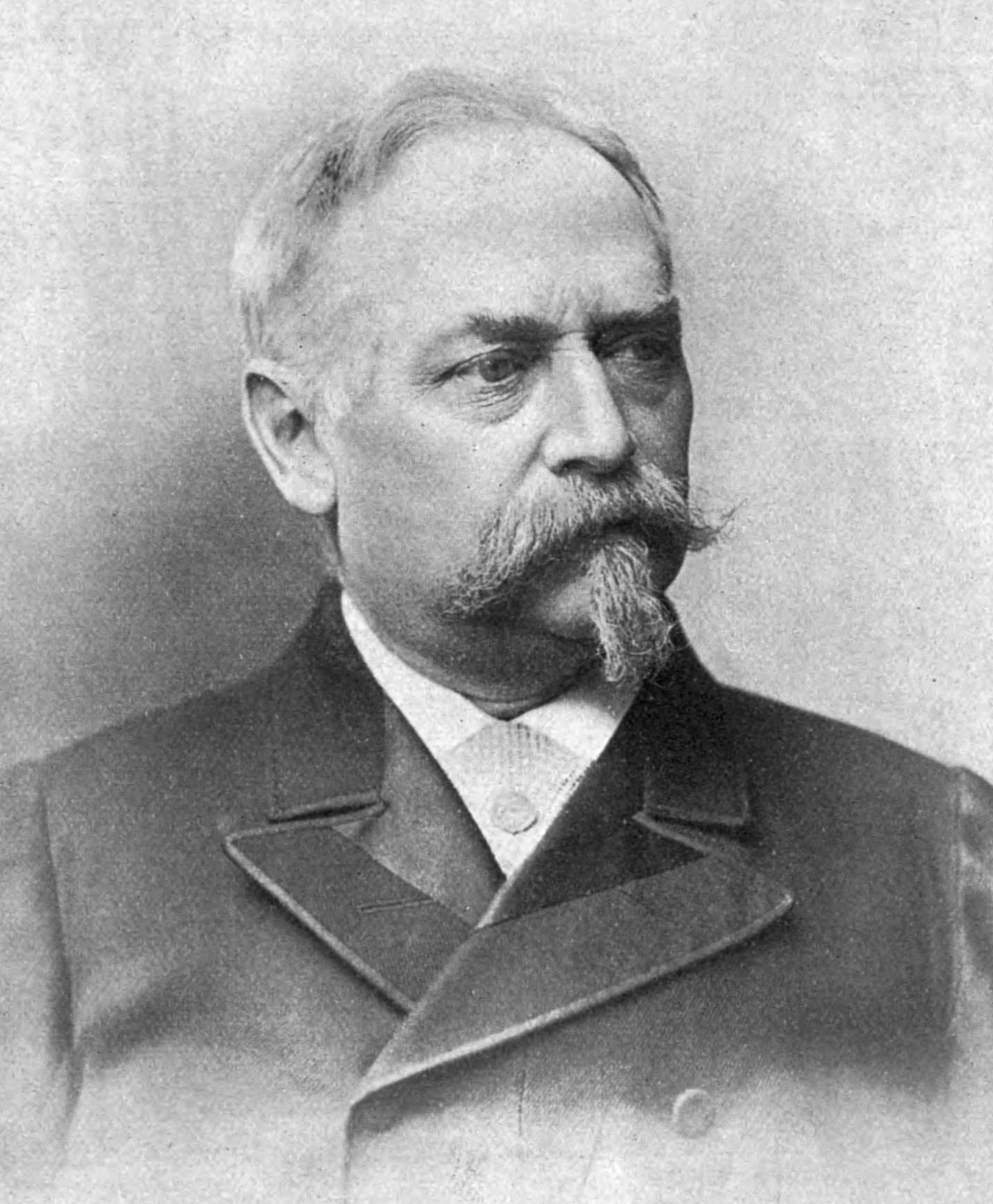
Green's delay allowed Calvert Vaux (above)—himself no slouch when it came to cultivating influential New Yorkers and the press—to mount a counter campaign to induce the commissioners to renounce Hunt's project. Playing the egalitarian card, Vaux characterized the design as anti-democratic and "continental" and conceived for the "panjandrum," not the common man.

To deadly effect, he likened Hunt's plazas to the antechambers of Versailles: "the imperial style presumes that people wait, wait and hang around, and provision is made for clients, courtiers, subordinates and laqueyes" (sic) to cool their heels in suitable splendor. He went on to say that the average New Yorker did not need such airs, and exclaimed, "How fine it would be to have no gates" in the park at all, and "to keep open House and trust all always."

Hunt's plazas, doomed as much for their massive cost as for their obvious æsthetic clash with the park's pastoral simplicity, were eventually shuffled aside, though Hunt exhibited his drawings at the Academy of Design in 1865 to force the issue, to no avail. The question of the form of the park's actual enclosure then came to the fore. Several commissioners admired the spiked iron fences enclosing Parisian parks but Olmsted, quoting Ruskin, noted that "An iron railing always means thieves outside or Bedlam inside."


After "six months of serious trial" and despite the large economies an iron fence offered, Vaux finally dissuaded the commissioners from adopting an "iron cage" in favor of a low stone wall that would allow the pedestrian's eye "to roam at will" over the landscape inside. Today, these rusticated brownstone boundary walls, cast green with moss (above), are as comfortingly familiar to New Yorkers as chrome-yellow taxis.

In 1866 the board issued a proclamation, stating: "The construction of the Park has been easily achieved because the industrious population of New York has been wise enough to require it, and rich enough to pay for it."


"To extend to each citizen a rightful welcome," the board named the park's four principal entrances along Central Park South to honor the people themselves: the city's "Artisans," "Artists," "Merchants" and "Scholars." 133 years later, in 1999, the Central Park Conservancy finally saw to it that simply inscribed stone markers (above) were inset into the boundary wall to identify each entrance.